Favorite recent and insightful quote I have read recently:

Favorite quote I have recently read: "The word temple comes from the Latin templum, which signifies an extended open space that has been marked out for the observation of the sky. In what manner is such a space marked out? According to Dr. Hugh Nibley, the word templum, "designates a building specifically designed for interpreting signs in the heavens--a sort of observatory where one gets one's bearings on the universe." The root "tem-" in Greek and Latin denotes a "cutting" or intersection of two lines at right angles, the point where the "cardo" and "decumanus" cross, hence where the four regions come together." Matthew Brown - "The Gate of Heaven"
Showing posts with label Food in Peru. Show all posts

Saturday, September 10, 2011

Potato Tales from Peru, with Love...

This week has been very enjoyable for us as we were able to meet and work with the new missionaries  assigned to the Lima Temple from the USA.  We shared a little time in training and then had a pleasant lunch and conversation on Sunday. RA and I contributed a dish served cold or at room temperature called 'papas a la huancaina.' Literally it means 'potatoes from Huancayo,' which is a city and district in Peru to the east of Lima in the central highlands.  The original inhabitants, or Huancas as they were known, aside from developing this wonderful recipe for cheesy potatoes supported the Spanish Conquistadores against the Inca. They assumed the Europeans would be better overlords than the Inca.  In hindsight, three hundred years of slavery, and working the Spanish silver mines proved that decision to have been uninformed.
Papas a la Huancaina, courtesy of Wiki.  We did not take any
photos. 

The potato or papas section in our local grocery store, increíble 
We have found this dish is not often served in Peruvian restaurants as it is easily made at home.  I have included the link to the recipe we used.  The ingredients would not be the same stateside as in Peru but some improvising and substituting is possible.
Huayro potatoes are maybe mi favorita. They have purple skins and streaks
within making them popular with local chip manufacturers. Too good to
waste in chips in my opinion.
Since coming to Peru we have experienced several varieties of potatoes or 'papas' as they are known in the Quechua language. We are coming to appreciate the subtleties of their flavor and texture. Potatoes will never ever be the same again for us as they are so superior to anything from Idaho or east of the Cascades in Washington or Oregon.
Cuy with Can Chan Papas. This type absorbs the flavor of meat or
stews in which they are cooked, excellent.  This dish was prepared by
our friends the Ramos. 

The Andean camote or sweet potato from which Polynesian potatoes are
genetically linked.
Potatoes, like other things we enjoy, originated in the Andean region of South America including, beans, peppers, ground cherries, tomatoes, cotton, several varieties of corn, and peanuts. The earliest potatoes according to several accounts were first cultivated 7 to 10,000 years ago. The first Peruanos or human inhabitants arrived here some 12,000 years ago. One of their first habitations is known as Guitarrero Cave. A human mandible was found there along with remnants of many meals of corn, beans, and peppers. A fire stick, as seen on reruns of TV's Survivorman, was also recovered from the site. I was never successful making fires with one of these as a Boy Scout.
Guitarrero Cave not far from Casma.  These people were likely the ancestors 
of the Chavin long before the Inca but possessed sweet metal working and 
soldering skills. 
The fire stick recovered from Guiterrero Cave
Of potatoes, there are more than 3500 varieties in Peru. Genetically, the Polynesian sweet potato's home was in the Andean altiplano to the south of Peru near Lake Titicacca. The oldest sweet potato discovered, so far in Peru, was found in another cave called the Tres Ventanillas and carbon dated 10,000 years ago in the Chilca Canyon of Huancayo Region.  I wonder how long the Huancas have been cooking papas and with their cheesy pepper potato sauce.  So far, I have not found any information on radio carbon dated Huancaina sauce.

One theory for the spread of the Andean sweet potato discounts the seafaring ability of either early Peruvians or Polynesians and suggests the non European transmission of the sweet potato from Peru to Hawaii and the other islands of the Pacific was accomplished by seeds floating on the surf or carried aloft in the guts of the plover birds.  The problem with this theory of diffusion is  the Peruvian and Polynesian sweet potato must be started from cuttings from a vine.
Sweet Potato vines of Polynesia and Peru
The Nazca culture of early Peru have been suggested as the sailors responsible for these trans Pacific crossings. These are the people who created the giant and strange geoglyphs or Nazca Lines of Southern Peru. They flourished from approximately 300 BCE to 800 CE. A number of marine animals have been caricatured in their pottery and art, giving rise to the belief they were familiar with the sea and were possibly a seagoing people.  Another mysterious geoglyph is above the entrance to Pisco Bay in Paracas. It can be seen about 12 miles out to sea. No one presently knows why it was constructed or what it symblizes. Theories range from it being a symbol for the Andean God Viracocha to a Masonic symbol.  Carbon dating of pottery shards found near it place it during the era of the Paracas Culture of 200 BCE, predating that of the Nazca.
The Candelabra as it is called, taken from the boat on our way to the
Ballestas Islands during our August vacation.
Radio Carbon Dating and DNA studies on residues from the Cook Islands and other island locations disclose the Andean sweet potato arrived there between 1000 and 1100 CE and in Hawaii by 1290-1430 CE. Furthermore, Quechua and Maori I have been told by several of my educated Peruvian friends, share a few language cognates. This information may have come from work in the 1920's by an Italian/Argentine linguist. For example, the word for 'water' in Cusco Quechua is 'unu' while in Maori and Easter Island "unu" is to drink water. A fighting platform in Maori is called a 'puuhara' while in Quechua a 'pukhara' is a fortress.
The Candelabra with better shadowing taken from the Web
Very early on in the expansion of the Inca Empire a technique was developed to freeze dry several varieties of potatoes and fully preserve their nutritional value for extended periods of time.  The process took all of five days from start to finish. This was accomplished without vacuum chambers and liquid nitrogen cryogenic temperatures. This type of dried potatoes is called 'chuño' or 'papas secas.' We are wanting to try them too at some point. The potatoes are laid out at night in the subzero temperatures of the Andes and then exposed to direct sunlight during the day.  They were also flattened several times in the process by the feet of the indigenous Quechua. Once freeze dried they could be stored indefinitely. Carried on the backs of Inca warriors they provided the energy and fueled the expansion of the greatest empire in pre-Colombian Americas.
An Inca mummy in the fetal position.  This type 
of preservation was reserved for the the nobles 
and ruling elites. It was accomplished in the same
manner of freeze drying potatoes. Internal organs 
were first removed and then the drying and freezing 
could begin. 
This extensive variety of Peruvian potatoes has made it possible to keep crops safe worldwide in our era. This potato diversity has been necessary in preventing anything like The Great Irish Potato Famine of 1845-1852. It was the narrowness of so few cultivars or species brought back by the Europeans in the 16th and 17th centuries that allowed a blight to infect and destroy harvests in Ireland.  More than a million Irish died of starvation and another million migrated.  The entire population of Ireland was reduced by 25%. Among the emigres were Patrick and Bridget Murphy Kennedy whose grandson Joseph P. would be appointed and return to the British Isles as the Ambassador to the Court of St. James by FDR. He was the founder and Patriarch of the Kennedy dynasty in America.
Patriarch and Ambassador Joe Kennedy Sr. 
The rest, as they say, is history. Among Irishmen the saying goes that "God sent the blight, but the British caused the famine."  Ireland's pastoral countryside was highly desired and taken over by the English because of their taste for beef following the spread of wealth of the industrial revolution.  Reduced to smaller and smaller parcels of growable land, the Irish poor turned to the potato and it became their main food source. Without diversity and with no resistance to blight the Irish potato crops were destroyed. Nowhere else in Europe were the consequences so dire or a people more dependent on the potato for survival than in Ireland.
The face of Irish famine, a mother and her children.
The lowly Peruvian potato or papa has played a much larger role in the story of things, more than being a food source for ten thousand some odd years here in Peru. Life for the potato farmer in Peru is probably not a lot better than his Irish counterparts were in the mid 19th Century. The potato growing regions are among the poorest in the country and local residents struggle to buy their daily bread due to the increases in cost of wheat and transportation.  The government is encouraging its residents to eat more of their own product and also bread made with potato flour. All the while they search for markets abroad for the almost infinite variety and subtlety of colors, textures, shapes and flavors of the Peruvian potato.
Steep slopes and lack of available capital insure traditional back breaking
planting of la papas del Peru
We will continue shopping and cooking this most edible and wonderful tuber. We have had only a half dozen varieties to date, a few thousand more to savor and enjoy. Time will limit this endeavor and also our diets from over indulging. The next time you order fries with your burger consider the potato and appreciate a little more of its history and the influence it has had in these many millennia throughout the world. And yes, lest anyone forget, "La Papa es Peruana."

Further reading and photos of Peruvian papas can be found on a site hosted by Limaeasy.com.

Monday, July 18, 2011

Sunday Dinner Mormon Style in Peru

Yesterday, friends from the Temple came over for Sunday dinner. Typical in Utah and the intermountain area would be roast beef or some sort of pot roast at least at our house.  In Peru things are different, but no less enjoyable and tasty.  Our friends had been promising us cuy, 'Alan Garcia' size cuy.  It is a joke, since the outgoing President Garcia of Peru is very large, hence any large size cuy are named in his honor by Brother Ramos.  This president leaves with a significant majority of Peruvians disapproving of his job for the past five years even though Peru's economy grew second only to China in the world.
President Garcia did not get this way eating cuy
Large cuy are very prized and sell first in the markets.  65 million of these creatures were consumed in Peru last year and remain an important part of the diet of the average Peruvian. Since the 17th Century these rodents, neither pigs or from Guinea, have been used as test animals for laboratory experiments, resulting in the epithet, "guinea pig" as a test subject. White mice and rats have largely replaced cuy as the vehicles for laboratory testing.

   
Our friends Brother and Sister Ramos with RuthAnn

No longer found in the wilds of the Andes, they appear to have been entirely domesticated beginning about 7,000 years ago. They are rodents and subsist in table scraps from any home where they are raised.  Efforts are being made to develop markets for their meat in Japan, Europe and the US. It is unlikely, at least in the US, there will be much of a market for the meat, rather they are pets for kids. Who has not had a pet guinea pig in their childhood?
Black cuy have important roles in the folklore and traditions of many
Andean peoples and cultures often used in diagnosing and treating diseases. 

In addition to the cuy we enjoyed camote or sweet potatoes, papas amarillo or yellow potatoes, and a side dish we had cooked of quinoa, black beans, chicken, onions and a little aji pepper.  We toasted our Alan Garcia cuy, our friendship, Peru's success in the America Futbol Cup, and Arequipa, with some fresh chi cha morada also supplied by our friends.
The cuy roasted in the pan along with some Peruvian potatoes
We continue to enjoy life in Peru. We appreciate the Ramos who have introduced us to many new and interesting dishes. Food from Arequipa, even among the Limeños we work with, is recognized as among the very best in all of Peru. It is definitely 'presidential.' We should note also that rumors have been floating around the Area Offices that a third temple will be announced in Peru in the relative near future. We hope it might be in Arequipa, Peru's second largest city.
Cuy on my plate. You cannot be delicate with it and it does
require picking up pieces and using one's fingers to get
the meat from the bones. 

Wednesday, July 13, 2011

Quinoa or Kinwa, it's the same thing

Quinoa is a hot cereal that I have had only a mild interest in for some years. It can be used as a substitute for rice and couscous in which form I think I first experienced it in daughter Alice's kitchen. We have friends in the temple from Arequipa and they have prepared it several times for us.  Sister Ramos recipe is unlike any I have ever had and would like to duplicate, though I think it is heavy on the butter, cheese, and cream, maybe even having some chicken broth. In any case I have not found anything from Arequipa that I have not thoroughly enjoyed.
Cooked and waiting to cool to put into the refrigerator after
I had a couple small bowls
My experimenting for an alternative to my normal breakfast of eggs fried, or eggs scrambled is proceeding well with the quinoa.  I start with a third full blender of water and add an entire large onion, a rocoto pepper, a fresh tomato or two and let it rip. After everything is blended I add 4 ounces of mild white cheese, also from Arequipa, called queso paria.  If it were a lot stronger it might pass as a feta goat cheese, but queso paria is from the cow. Two cups of water and one of milk are being heated on the stove top and the enitre mixture is put together. When it starts to boil I add a 500 gram package of quinoa and let it cook, stirring occasionally until the seeds become a little softer. I add a little salt to taste. There is enough piquancy with one rocoto that RA does not complain too much. It is easier and faster to cook than rice and of course much healthier.
Quinoa plants in the farmer's field about to be harvested 
Quinoa is not a true grain like wheat or oats, but is more closely related to beets, spinach and tumbleweeds maybe amaranth too.  With the Inca it was esteemed as the mother of grains or "chisaya mama."   It has a very long history, like so many other things in Peru, and archaeologists have found non domesticated quinoa dating back 7,000 years among various ruins.

It is related to other similar plants of the Northern Hemisphere known as 'fat hen' or something called 'pitseed goosefoot.' This crop was important to a number of the indigenous inhabitants of the Americas before maize became the dominant crop though among the Inca of Peru it was second only to the potato in importance for their diet.  It is high in protein 12-18% and is a complete protein, unlike rice and wheat, which is very unusual among plants, according to Wiki. In addition, it is high in iron, magnesium, phosphorous, and a good source of dietary fiber. The Spanish Conquistadores forbade its planting for a time making the Inca substitute wheat in its place. For many years, even centuries, well into the colonial period, it was viewed as "indian food." So important was it to the Inca that the emperor would plant the first seeds of the new crop with a golden shovel. It was sacred to the Inca. Maybe I can find a golden spoon to enjoy our quinoa for breakfast and lunches at the temple.

One funny story I had read elsewhere, in researching quinoa, concerned efforts by genetic engineers to modify the quinoa seeds to remove the very bitter and protective coating on the seeds called saponins.  Through successful breeding and genetic modification strains of quinoa were grown without this bitter coating. It also has a serious laxative effects and some care has to be taken by the processors in removing the saponin during processing.  Several fields were planted for farmers here in Peru and with some amount of expectation with increased profits due to less processing time. A good deal of enthusiasm was exhibited as these GM crops neared harvest.  When the seeds began to change color signaling harvest time, thousands of birds also determining this quinoa had been grown for them descended on the defenseless plants.  One observer likened it to Alfred Hitchcock's movie 'The Birds.' Quinoa remains unmodified today, being the same plant that has been planted and harvested in the Andes mountains and plateaus for thousands of years.

We want to learn to prepare quinoa Arequipa style. I did find twenty+ recommended recipes for this versatile grain on a web site called allrecipes.com

Sunday, June 26, 2011

Forty Weeks or Forty Winks...

RA informed me this week it has been 40 weeks since we entered the MTC at Provo.  I thought and expressed, "How can that be?" The time has gone by quickly. Maybe it has been '40 winks,' not 40 weeks. 40 winks has some deeper roots in the English Language and has been used by Lewis Carrol and others. Generally speaking it refers to a short sleep or nap outside of a bed. I have enjoyed that experience in the custom made recliner in our living room on occasion. It is not uncommon, as we work in the Temple, to observe so many who travel so far and work so long to be taking 40 winks wherever they can. I have come close to that myself. On occasion I have had to nudge the segadora with me on a session trying to take 40 winks. There is a biblical connection to this idiomatic noun. In a play by Robert Louis Stevenson named, "King's Evidence," two characters discuss the failings of a third person. One says to the other, "Give him 40 winks, and he'll turn up as fresh as clean saw dust and as respectable as a new Bible."
We are having to add to our wardrobe with smaller sizes, not all bad
For more than a few weeks we have been seriously dieting and walking. Our high for one week was 25 miles. Lately, due to colds and other distractions we have not been able to log as many. Walking back from the parking lot at the Temple this morning our friends the pigeons swooped down and were expecting a handout. I had none as I don't carry crackers with me on Sundays. I returned home, changed and walked back in civilian clothes wondering if my friends the pigeons would recognize me without my Mr. Mac suit, white shirt and tie. Sure enough they flew from a half block away and landed at my feet waiting for their whole wheat crackers.
My friends recognized me even in civilian clothes
I asked RA the other day what she missed most since our serious dieting began. Her list began, with some emphasis: 1. "Sweets, what do you think?" Next in order of priority...
2. A batch of cookies
3. An Almond Joy
4. All the stuff I like to eat
5. Ice cream. "Which one I asked?" "Don't know, too many I have not tried here in Peru."
6. Cakes and Pies
7. Chocolate. 
8. I miss sweets!
9. Chocolate covered cherries with fondant
10. Orange sticks
My list was a little different: 
1. All the potatoes I would want to eat. Peru, among other things, has the best potatoes on the planet. Papas Amarillas are my favorite but there are others that I enjoy. 
2. The above mentioned potatoes need to be accompanied with carne, i.e. steak, alpaca, chicken Peruvian style or just the Sunday dinners I cook.
3. Lomo Saltado.  This is a wonderful dish of onions, fine beef, tomatoes, peppers and more, piled on top of the best french fries on the planet.
4. Chocolate from Arequipa
5. RA's tuna casserole
6. Chocolate ice cream
7. Pancakes with real butter, or even with fake butter
8. Grilled cheeseburgers, french fries, and a Coke
9. Whole milk
10. A Snickers Bar
We will likely continue dieting and walking. The weather is cooler and pleasant most days to be walking in our neighborhood. My new Merrill walking shoes arrived from the US and they have made a change for the better. 
Too warm to hold, just off the stove
At one of our favorite markets we found, the original and native to Peru, ground cherries.  As a kid we used to have homemade ground cherry jam on waffles and pancakes. Now that RA has made jam from our recent purchase the diet will be set aside to enjoy it on some pancakes. We don't have a waffle iron but maybe for the occasion we will acquire one. It brings back lots of fond memories of home growing up in Centerville. Thanks Mom and RA for so many good things in life that I am the beneficiary of. Peru remains an incredible place with so much to discover and to enjoy.
Known as Inca berries though the Peruvian name is 'Aguayamanto'
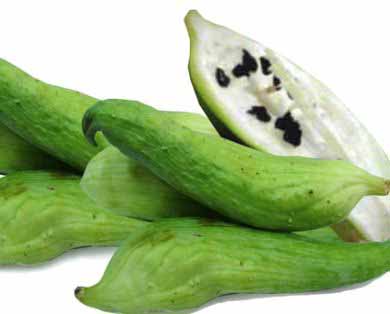
Our friends from the Temple "came" to dinner at our place and instead they brought the best dishes on the table. We learned about a new vegetable native to Peru called 'Cayhua.'  It is a member of the cucumber family but does not taste like one, more like a pepper but not hot.  They were stuffed and delicious. We also had a quinoa dish with cheese from Arequipa, milk and other ingredients. It is the best way to enjoy quinoa we have found.
The Caihua fruits are hollow for easy stuffing. The seeds are removed during preparation.
Caihua like many other foods, plants, and vegetables in Peru is being studied for their medicinal uses. Among the claims for Caihua are blood pressure, cholesterol lowering, and diabetes prevention. Caihua was taken to Florida and planted and has become a pest, not as prevalent as kudzu but bordering on the obnoxious due to its vines that when mature can be climbed on. One other verified claim we can make for Caihua is that it is very pleasant to enjoy with friends on a Sunday afternoon in Lima Peru. 

Thursday, June 16, 2011

More about Ajis de Peru*

Friends confirmed to me there is another hotter pepper here in Peru, not to be found in the large chain groceries, but in the small neighborhood markets. It is called aji pinguita de mono.  It apparently is in the Jabañero range of 100,000 to 300,000 Scoville Units of piquancy.  Now the search is on to find a local store that might have these peppers.  They are not commercially grown but are harvested in the jungle.  One other web site I follow, at least weekly, is called Living in Peru.  They have an article and writeup about a restaurant in Miraflores that uses the aji de mono for select customers.
The Aji Mono peppers turn from green to red as they ripen. Could they be
the source for the Jabañero peppers of Mexico? 
RA made me some salsa once with straight Jabañeros, yellow tomatoes, and onions.  It was so hot I could not eat it but succeeded in getting her to cut it at least by 50% with more tomatoes. We need a few aji de monos for an upcoming 4th of July picnic at the president's house. It is the twice monthly FHE get together for the Norte Americano missionaries. I would like to supply some dragon wings for the event in the range of 50 to 100,000 on the Scoville Index. The dragon wings I am hoping will at last take flight and no one will ask for second helpings. Until then they will only be buffalo wings.

*Just a note also to any who read and follow this blog among our family and friends, like the small and large plates Nephi made, one set contained the history of their rulers and their kings and the everyday events of their lives. The smaller plates contained the writings of the spiritual things that occurred amongst the people. It is not appropriate that we write about the spiritual things that happen often in our lives as temple workers in the Lima Peru Temple.  You will have to come to our homecoming addresses, more than a year away, and even then we can't tell all.  They are special and we keep them close to us and on occasion share them with family. For the present we hope you will enjoy the secular events and experiences we love so much in this marvelous land of Peru. On the internet no one knows where anything goes and there is no way to call it back once it is posted.

Thursday, June 9, 2011

Peruvian Hot Peppers and Dragon Wings

Because of last week's election the temple was open only Saturday morning. In the afternoon we had a very pleasant gathering at the first counselor's apartment for all the senior Norte Americano missionaries and temple missionaries. I volunteered to bring some buffalo wings and RA brought a very fine veggie basket.  I have been in search of hot peppers in Peru for the eight months we have been here, but generally the hottest available are called rocoto. It is from Quechua, one the two predominant indigenous languages of the Andean region of South America, and rendered originally as 'rucutu.' Rocoto have evolved over the millennia and are commercially grown and harvested. Plants can grow to four meters in height, becoming woody and resembling a tree. I would love a rocoto pepper tree in my yard. They handle cold but not freezing temperatures I am certain. Because they do well in cool weather they are popular in Great Britain.
Rocoto plants last for years and resemble bushes to trees
Our favorite rocoto peppers are stuffed Arequipeño style and are made by our friends Brother and Sister Ramos with whom we work in the temple. There are no habeñero peppers in Peru though they apparently  originated here in Pre-ceramic cultures some 8500 years ago in the Peruvian highlands. Habeñero are cousins to the extremely hot Jamaican peppers known as Scotch Bonnet.  When the Spanish came the rocoto were taken to other regions of their empire, to Mexico and the Caribbean.  It is unclear in my preliminary research where the Scotch Bonnet Peppers came from. The Scotch Bonnets are much hotter than anything I have experienced. Rocoto peppers vary greatly in hotness. The hottest here are about equal to the halapeños in spicy hotness or 'piquance.'
Our friends the Ramos brought in dinner and cooked it in our oven.
Rocoto Relleños or stuffed rocotos. The recipes from Arequipa are the very best in Peru.
No Peruvian or Limeño I have talked to takes exception to that generalization. 
In order to make 'hot' sauce for my version of buffalo wings, known as dragon wings, I used nine rocoto peppers, both fried and ground up in the blender to give me something as hot as I could find at two different markets we shop at. Still it was not hot enough, just well in the range of halapeño hot. If people compliment you for your wings and come back for seconds, they are not hot enough. One of the other missionary couples from the temple liked my wings.
Frying up the wings. Note the new 4" smaller waste size  jeans.
Cannot prepare wings too often on our present diets.
During the cooking phase we did have to open the door to the kitchen as the fumes coming off of the pan where the peppers were being seared acted like a sort of police pepper spray with our eyes watering and some coughing and challenge to normal breathing. Likely, it was because of the quantity or mass I was cooking.
The wings and peppers have all come together in the newly
repaired crock pot and will simmer on slow cook for three more hours.
RA's vegetable basket was very well received. She had a very good Ranch flavored dressing to go with it. All of the veggies were washed and rinsed in Clorox water, rinsed again in bottled water. Some of the vegetables were blanched/steamed lightly. Those kinds of precautions are mandatory for vegetables in Peru and not always is it safe for us northern folk to eat lettuce salads at a restaurant, though we still try.
RA's very attractive veggie basket. Peru has wonderful
fresh fruit and vegetables.
A subsequent trip to grocery store, and asking questions in the produce department, netted me some peppers called Aji Limo.  These are more recently cultivated in the Andes and are known for their citrus like flavor in addition to the piquance.  MotherEarth News has a nice writeup about these. They are not however located on the Scoville Chart for spicyness so additional experimentation will have to be carried out. I intend to prepare another batch of my dragon wings and will keep searching for the elusive truly hot Peruvian pepper. Rumor has it that in the jungle there is a small but very hot pepper.
Aji Limo Peppers were enjoyed by the Inca at every meal. Both flavor and its spicy
nature were important to the Inca according to early Spanish chroniclers.  
I have attached a Scoville rating chart for spicyness. The way the chart works is based on the volume of water necessary to reduce the pepper extract to something close to neutral, i.e. no fire when consumed such as Bell Peppers which are "O", having no piquance.

In a future post or addition I report how the Limo Aji Peppers added to the Scoville Index of my dragon wing sauce. The current rating, though very subjective, is probably in the 3,000 to 5,000 range.

UPDATE-- The addition of Aji Limo and Aji Amarillo Peppers to my Rocoto dragon wing sauce has not pushed them into the Jabañero range. Still in the Jalapeño range according to subjective comparisons of the Scoville Index. We are not yet flying supersonic. Stay tuned! 

Tuesday, January 18, 2011

Making Bread in Peru

A hot loaf of home made bread just cooled enough to slice


So far in our travels and experience in Lima we have not found a source for good bread. Even the whole wheat bread RA bought at Albertsons we cannot find the equivalent here in our favorite grocery store. The three traditional staples of Peruvian cuisine are corn, potatoes, and beans. Rice is a major component of any Peruvian meal though it is imported from elsewhere and was brought to South America by the Spanish along with wheat, chickens, and beef.  Since good bread is a delicacy and hard to find RuthAnn set the alarm early and started making the dough in order to have hot bread out of the oven before we leave for our afternoon shift at the temple.  All of our daughters make bread and had lessons watching Grandma Fisher.  My mother told me that she first started when she was 12 years old and was taught by her Grandmother Ford.  RuthAnn also said her mom started baking bread at a very early age also. Others in the family make wonderful bread too. 


The kneading process


Watching RuthAnn make the bread and capture a few photos of the process was quite informative and interesting. I had no idea of the amount a CO2 that  a little bit of yeast or leavening could do to a mass of dough.  Whole wheat flour is not found easily here either though we have been told it exists at somewhere. She adds wheat germ and bran which she can buy.  The process of making bread is physically rigorous and requires both effort and coordination.  She has a very practiced and choreographed method for kneading as she works the dough. 


Loaves just about ready to put into the oven


My role in all of this is to insure that a process called retrogradation does not occur. This can be detected visually as small water droplets or condensation form onto plastic bags within or without the refrigerator around a loaf. In simpler terms this process of retrogradation is known as "going stale." I insure its freshness by limiting its time on the kitchen counter. It is also retrogradation that makes pastries and bread temporarily moist as they come out of the microwave after not too long an exposure to microwave radiation.  Water is a byproduct of the process of molecular re-crystallization incorporated in retrogradation. 


I have a new and greater appreciation for bread making today. This batch, maybe because it was recorded on camera, has been her best to date. She also left out the oatmeal which might have been interfering with the gluten formation.  No worry about retrogradation here, a half loaf is gone already.


With homemade strawberry jam

Saturday, January 1, 2011

Ceviche or Cebiche...

January 30th 2012 -- Update  We are in the north of Peru in the Lambayeque region and for lunch I ordered cebiche as an appetizer. The name of the restaurant is El Cantaro. It has won numbers of nationwide awards in Peru and highly recommended by locals. The main course was cabrito with rice and beans and also very good. The cebiche came with camote, a deep fried corn fritter, along with yuca, and the standard choclo. We have depended on our friend Walter to deliver us to a number of archaeological sites in Trujillo and now Chiclayo.  He is also great at finding restaurants and recommending dishes to order.  Cebiche for me has been something of an acquired taste.  In the 16 months we have been in Peru I have come to appreciate and enjoy it more, especially when we have ordered it in the north of Peru.
Cebiche from El Cantaro in Lambayeque Peru.  Maybe the best I have 
experienced in Peru. 
Yesterday we tried another new restaurant in our neighborhood recommended to us in a round about way by a North American formerly associated with the temple. The place is called Puerto Mancora and they serve seafood.  Mancora is also a surfing and fishing village to the north of Peru and close to the border with Ecuador.  It is known for very good cebiche. The food at our restaurant was excellent. I had a platter of cebiche from fresh grouper marinated with lime/lemon, along with onions, hot peppers and other, unknown to me, ingredients. Cebiche is to Peruvian cuisine as sushi is to Japanese. Not surprisingly several Japanese chefs here have modified Peruvian cebiche to Japanese tastes here in Lima and elsewhere. This dish is enjoyed with some enthusiasm by almost every Peruvian, especially my friends in the temple. I am working on developing a greater appreciation for it. I also drank the accompanying marinade known affectionately as "la leche de tigre" or "la leche de pantera," meaning the 'milk of the tiger' or 'the panther.'  Their chicha morada or purple corn drink was as good as any I have enjoyed at any restaurant here. I had two large glasses.

Cebiche is enjoyed with corn, avocado, and sweet potatoes
The active ingredient, in this largely citrus based marinade, is citric acid and acts to neutralize the fishy smell of amines in the fish by converting them into ammonium salts. The lemon served with fish at many restaurants is not just for taste but to often conceal less than a fresh catch. The marinade aside from neutralizing "fishy"smells breaks down the collagen of the protein and the fish turns from its normal translucent sushi appearance to a "cooked" white appearance.  The marinade and the fish need to be kept cool for several hours while this process occurs. It is served cold and since no cooking has happened it can contain bacteria and micro organisms not affected by the exposure to the acid based marinade.  A chlolera outbreak in Peru was traced to infected fish or fish handlers back in the '90's, so some caution has to be exercised in selecting carefully either the fish or the restaurant where you will enjoy this dish.

The origins of cebiche or ceviche are in dispute.  Historians and archaeologists here have suggested there is evidence that a pre-Incan culture known as the Moche (100 AD to 800 AD), had recipes for this fish cooked without heat in a marinade at least 2000 years ago, though it is thought Christopher Columbus, along with death, disease, and destruction, brought citrus seeds to the new world to Hispanola.  Another theory suggests cebiche came with the Spaniards from the Moorish women who accompanied the conquistadores. The Muslim Moors were Arabs who at one time ruled and had predominant cultural and political influence on the Iberian Peninsula for five centuries. Even the entomology of the word cebiche is conflicted as both Quechua, the native Inca language and Arabic have cognates.  Due to the Arab domination of the peninsula there are many Arabic words incorporated into Spanish. Among them are the words for sugar 'azucar' and olive oil 'aceite.' We just had municipal elections in Lima for a new mayor. He is known as the 'alcalde.' This is from the Arabic 'al-qadi', meaning the judge.
Moche Portrait sculture in a pitcher
In any case Lima Peru is the predominant area for cebiche, though it is found in the Caribbean, Mexico and throughout all of South America. Not unusual given the four centuries for which the Spaniards largely controlled the continent from the Viceroyalty of Peru from Lima. In the 1980's it made its way into North America and is found at upscale restaurants other than those operated by native Peruvians or South Americans from California to New York City.

We have on our schedule several museums here in Lima and Cusco we want to visit to learn more about life in Pre-Columbian Peru of the Moche, Chimu, and Inca peoples. There are at least 4,000 years of history here before the Europeans came. One  museum is known in English as the 'National Museum of the Archaeology, Anthropology, and History of Peru.' The other is simply known as the 'Larco Museum' and is owned privately. This museum also has a restaurant we are told that serves very good cebiche.  Moche artifacts and ceramics are often known among archaeologists for their extensive representation of erotic themes and caricatures. More so than any other civilization or culture anywhere in the world. It is a draw for the many curious foreign tourists. Likely, we will avoid that room in the Larco.  The Moche were fine craftsman in other areas as these sculptured ceramics suggest. They also used molds in producing their works which apparently was unusual for an ancient culture.
Moche sculpted portrait pitcher
We should also observe and note the deserts were very good at the Puerto Mancora. RA ordered the desert of the day and we were not sure what it was and our language skills are still quite challenged. Mine was easy, a couple brownies under vanilla and chocolate ice cream. The food overall in Peru is really superb.

Desert Time at the Puerto Mancora


Monday, November 22, 2010

Eating Cuy (Guinea pig) in Lima

A little hole in the wall family restaurant with very good barbecued ribs,  chicken, and cuy
Today we went to a locally recommended barbecue place that also serves guinea pig. I tried both the pork ribs and the guinea pig and I have to say both dishes were excellent. In Peru and other Andean countries these rodents are called cuy. They do not exist in the wild but were domesticated and bred for their meat thousands of years ago. It is such a delicacy the animal was usually reserved for ceremonial meals by the indigenous peoples of the Andean highlands. Lately though it has become more socially acceptable for consumption by anyone including us gringos. It continues to be a major part of the diet in the highland areas of Peru, though not as easily found on restaurant menus here in Lima. Because cuy require much less room than traditional farm animals and reproduce very quickly they remain a more profitable source of food and income than many traditional stock animals.
This was my cuy just before being put into the oven. 


Whats does it taste like? Well, it does taste like chicken, such as the dark meat. I have to say I enjoyed enough that I would order it again and lieu of barbecued chicken which we get a lot of here anyway. Cuy meat is high in protein and low in fat and cholesterol. It has been described to me as tasting like rabbit but I think it is better. We had the cuy roasted in an oven. This style is called 'al horno.'
The chips are sliced potatoes on site and served hot from the frier


Peruvians consume an estimated 65 million guinea pigs each year, according to Wiki, and the animal is so entrenched in the culture that one famous painting of the Last Supper in the main cathedral in Cusco shows Christ and the twelve disciples dining on cuy. The animal remains an important aspect of certain religious events in both rural and urban areas of Peru.
It was hot and just out of the horno or masonry oven

Further, work is being done at research universities here in Peru, with the intention of breeding larger-sized cuy. I must have had one of these larger sized cuy as there was a significant amount of meat. Subsequent university efforts have sought to change breeding and husbandry procedures in South America, in order to make the raising of guinea pigs as livestock more economically sustainable. Beginning In the 1990s and 2000s, Peru began exporting the larger breed of cuy to the States, Europe and Japan with the hope of increasing human consumption outside of the Andean region of South America.

Making Chicha Morada this morning...

I am preparing some chicha morada here in our apartment this morning for our Norte Americano FHE group tonight along with RA making orange rolls and I contributing some mashed potatoes for an early Thanksgiving Dinner. The last time I made it Paco gave it only a “6” on a scale of 1 to 10. I am endeavoring to reach a 7 this morning. It should be possible considering I am using local ingredients and the pineapple is so sweet here. Chicha is a fruit drink made from a special corn grown in many places throughout the western hemisphere but comes from the maiz morado or purple corn. It is sweet and usually unfermented. Remains of a 1,000 year old production facility for chicha have been discovered on a mountaintop here in Peru. Chicha is a delightful drink and we appreciate our Peruvian friends for introducing it to us along with so much else. 

In recent years many health benefits of purple corn have been found and it is being studied seriously at universities in the US including Texas A&M. Research has shown that purple corn contains cell-protecting antioxidants with the ability to inhibit carcinogen-induced tumors in rats. Many plant-derived substances are believed to show these properties including blueberries, but few have demonstrated the anti-inflammatory capabilities and the potential as purple corn. Anthocyanins are responsible for the purple, violet, and red colors attending many plants. Anthocyanins belong to an even larger class of plant chemicals known as flavonoids and are found in diverse plants. These antioxidants in purple corn are 10 to 12 times the content found in blueberries. Other health benefits claimed by these anthrocyanins found in purple corn include prevention of cardiovascular disease, increases blood flow, act as diuretics lowering blood pressure, and the promoting of tissue regeneration and healing.

Our chicha, like other recipes, includes pineapple, fresh key limes, (added after cooking), apples, cinnamon, clove, and orange juice in addition to the purple corn. It is sweetened to taste and it will be enjoyed with our early Thanksgiving dinner in Peru. We have much to be grateful for though we are away from family and friends this year. We will be working in the temple on Thursday, but being here in Peru has only added to our gratitude for so much that we so easily take for granted. We see our fellow temple workers here who sacrifice food for the price of bus fare to be in the temple to complete their assignments. Many of the brethren cannot afford their white suits so and they rent jackets from the temple and make do with the best they have. Their shoes are worn and old but they are always a very happy people. I admire them greatly. 

If you want a recipe for chicha you can find them online and you can also email my friend Paco for a recipe. I know he won't give you his recipe for a "10" chicha but he will help you to enjoy this very healthy and enjoyable drink.