Favorite recent and insightful quote I have read recently:

Favorite quote I have recently read: "The word temple comes from the Latin templum, which signifies an extended open space that has been marked out for the observation of the sky. In what manner is such a space marked out? According to Dr. Hugh Nibley, the word templum, "designates a building specifically designed for interpreting signs in the heavens--a sort of observatory where one gets one's bearings on the universe." The root "tem-" in Greek and Latin denotes a "cutting" or intersection of two lines at right angles, the point where the "cardo" and "decumanus" cross, hence where the four regions come together." Matthew Brown - "The Gate of Heaven"

Wednesday, July 13, 2011

Quinoa or Kinwa, it's the same thing

Quinoa is a hot cereal that I have had only a mild interest in for some years. It can be used as a substitute for rice and couscous in which form I think I first experienced it in daughter Alice's kitchen. We have friends in the temple from Arequipa and they have prepared it several times for us.  Sister Ramos recipe is unlike any I have ever had and would like to duplicate, though I think it is heavy on the butter, cheese, and cream, maybe even having some chicken broth. In any case I have not found anything from Arequipa that I have not thoroughly enjoyed.
Cooked and waiting to cool to put into the refrigerator after
I had a couple small bowls
My experimenting for an alternative to my normal breakfast of eggs fried, or eggs scrambled is proceeding well with the quinoa.  I start with a third full blender of water and add an entire large onion, a rocoto pepper, a fresh tomato or two and let it rip. After everything is blended I add 4 ounces of mild white cheese, also from Arequipa, called queso paria.  If it were a lot stronger it might pass as a feta goat cheese, but queso paria is from the cow. Two cups of water and one of milk are being heated on the stove top and the enitre mixture is put together. When it starts to boil I add a 500 gram package of quinoa and let it cook, stirring occasionally until the seeds become a little softer. I add a little salt to taste. There is enough piquancy with one rocoto that RA does not complain too much. It is easier and faster to cook than rice and of course much healthier.
Quinoa plants in the farmer's field about to be harvested 
Quinoa is not a true grain like wheat or oats, but is more closely related to beets, spinach and tumbleweeds maybe amaranth too.  With the Inca it was esteemed as the mother of grains or "chisaya mama."   It has a very long history, like so many other things in Peru, and archaeologists have found non domesticated quinoa dating back 7,000 years among various ruins.

It is related to other similar plants of the Northern Hemisphere known as 'fat hen' or something called 'pitseed goosefoot.' This crop was important to a number of the indigenous inhabitants of the Americas before maize became the dominant crop though among the Inca of Peru it was second only to the potato in importance for their diet.  It is high in protein 12-18% and is a complete protein, unlike rice and wheat, which is very unusual among plants, according to Wiki. In addition, it is high in iron, magnesium, phosphorous, and a good source of dietary fiber. The Spanish Conquistadores forbade its planting for a time making the Inca substitute wheat in its place. For many years, even centuries, well into the colonial period, it was viewed as "indian food." So important was it to the Inca that the emperor would plant the first seeds of the new crop with a golden shovel. It was sacred to the Inca. Maybe I can find a golden spoon to enjoy our quinoa for breakfast and lunches at the temple.

One funny story I had read elsewhere, in researching quinoa, concerned efforts by genetic engineers to modify the quinoa seeds to remove the very bitter and protective coating on the seeds called saponins.  Through successful breeding and genetic modification strains of quinoa were grown without this bitter coating. It also has a serious laxative effects and some care has to be taken by the processors in removing the saponin during processing.  Several fields were planted for farmers here in Peru and with some amount of expectation with increased profits due to less processing time. A good deal of enthusiasm was exhibited as these GM crops neared harvest.  When the seeds began to change color signaling harvest time, thousands of birds also determining this quinoa had been grown for them descended on the defenseless plants.  One observer likened it to Alfred Hitchcock's movie 'The Birds.' Quinoa remains unmodified today, being the same plant that has been planted and harvested in the Andes mountains and plateaus for thousands of years.

We want to learn to prepare quinoa Arequipa style. I did find twenty+ recommended recipes for this versatile grain on a web site called allrecipes.com

Monday, July 11, 2011

100th Anniversary of Hiram Bingham's visit to Machu Picchu

Next month when the Lima Temple closes we will make our journey once again to the sacred mountain city of the Inca, Machu Picchu. We visited previously in February of this year with our friends the Cooks  and Miky.
All of us at the entrance to Machu Picchu.  We arrived during the rainy
season but had incredible weather as the clouds were lifting from above the city
There are a number of theories about what role Machu Picchu played in the life of the Inca civilization and the last Emperor Pachacuti who ruled there.  It might have been a royal residence, a resort, a fortress, a prison, a holy site or some combination of the aforementioned. In July of 1911 Hiram Bingham, the first American to visit it, announced to the world he had "discovered" Machu Picchu. Though he is credited with this, several other non native explorers had been there prior to Bingham. The artifacts and treasure removed by Bingham and lodged at Yale University for a hundred years have partially been returned to Peru with a little encouragement from the Obama Administration. The artifacts are now on display in Cusco where they should be.
The Intihuatana Stone determined the solar equinoxes and solstices. 
Recent work done by Dr. Johan Reinhard, an explorer and anthropologist in residence with National Geographic, suggests another theory not totally at odds with the others but emphasizing the religious nature of Machu Picchu.  It is based on the notion of "sacred landscape." Machu Picchu is located in mountainous terrain at about 8,000 feet in elevation surrounded by the Urubamba River. Mountains, rivers, and other natural features of the land were sacred to the Inca and known as huacas. Four adjacent mountains, one in each of the cardinal directions, align the city with this highest and perhaps most important point, the Intihuatana Stone.These stones were to be found throughout Peru before the Spanish came to aid the many cultures and civilizations prior and including the Inca to track the seasons for planting, the expected arrival of the rainy season and for harvesting.
The Temple of the Sun. Windows allow the sun to shine across
the altar stone at both solstices. The heliacal rise of Pleiades was
also observed from one of the windows. 
Machu Picchu escaped destruction by the Conquistadores because it may have been partially abandoned prior to Pizaro's conquest of the Inca.  It is postulated smallpox or typhoid fever wiped out many of the indigenous peoples of the Americas not long after Columbus set foot in the Caribbean. One scholar, Charles Mann, in his book "1491" estimates upwards of 100 million indigenous peoples inhabited the Americas prior to the arrival of the Europeans. The Inca fell to the Spanish due to their weakened state brought about by factionalism, civil war, and the European diseases which arrived well before Pizaro.
The Urubamba River nearly circumnavigates Machu Picchu
Continued studies will be made and theories will be modified as time passes but Machu Picchu will remain a place so incredible words cannot adequately describe its beauty, the skill with which it was built, and its location high in the Andes. Dr. Reinhard fittingly observed Machu Picchu is a place "where reality exceeds expectations."

Sunday, June 26, 2011

Forty Weeks or Forty Winks...

RA informed me this week it has been 40 weeks since we entered the MTC at Provo.  I thought and expressed, "How can that be?" The time has gone by quickly. Maybe it has been '40 winks,' not 40 weeks. 40 winks has some deeper roots in the English Language and has been used by Lewis Carrol and others. Generally speaking it refers to a short sleep or nap outside of a bed. I have enjoyed that experience in the custom made recliner in our living room on occasion. It is not uncommon, as we work in the Temple, to observe so many who travel so far and work so long to be taking 40 winks wherever they can. I have come close to that myself. On occasion I have had to nudge the segadora with me on a session trying to take 40 winks. There is a biblical connection to this idiomatic noun. In a play by Robert Louis Stevenson named, "King's Evidence," two characters discuss the failings of a third person. One says to the other, "Give him 40 winks, and he'll turn up as fresh as clean saw dust and as respectable as a new Bible."
We are having to add to our wardrobe with smaller sizes, not all bad
For more than a few weeks we have been seriously dieting and walking. Our high for one week was 25 miles. Lately, due to colds and other distractions we have not been able to log as many. Walking back from the parking lot at the Temple this morning our friends the pigeons swooped down and were expecting a handout. I had none as I don't carry crackers with me on Sundays. I returned home, changed and walked back in civilian clothes wondering if my friends the pigeons would recognize me without my Mr. Mac suit, white shirt and tie. Sure enough they flew from a half block away and landed at my feet waiting for their whole wheat crackers.
My friends recognized me even in civilian clothes
I asked RA the other day what she missed most since our serious dieting began. Her list began, with some emphasis: 1. "Sweets, what do you think?" Next in order of priority...
2. A batch of cookies
3. An Almond Joy
4. All the stuff I like to eat
5. Ice cream. "Which one I asked?" "Don't know, too many I have not tried here in Peru."
6. Cakes and Pies
7. Chocolate. 
8. I miss sweets!
9. Chocolate covered cherries with fondant
10. Orange sticks
My list was a little different
1. All the potatoes I would want to eat. Peru, among other things, has the best potatoes on the planet. Papas Amarillas are my favorite but there are others that I enjoy. 
2. The above mentioned potatoes need to be accompanied with carne, i.e. steak, alpaca, chicken Peruvian style or just the Sunday dinners I cook.
3. Lomo Saltado.  This is a wonderful dish of onions, fine beef, tomatoes, peppers and more, piled on top of the best french fries on the planet.
4. Chocolate from Arequipa
5. RA's tuna casserole
6. Chocolate ice cream
7. Pancakes with real butter, or even with fake butter
8. Grilled cheeseburgers, french fries, and a Coke
9. Whole milk
10. A Snickers Bar
We will likely continue dieting and walking. The weather is cooler and pleasant most days to be walking in our neighborhood. My new Merrill walking shoes arrived from the US and they have made a change for the better. 
Too warm to hold, just off the stove
At one of our favorite markets we found, the original and native to Peru, ground cherries.  As a kid we used to have homemade ground cherry jam on waffles and pancakes. Now that RA has made jam from our recent purchase the diet will be set aside to enjoy it on some pancakes. We don't have a waffle iron but maybe for the occasion we will acquire one. It brings back lots of fond memories of home growing up in Centerville. Thanks Mom and RA for so many good things in life that I am the beneficiary of. Peru remains an incredible place with so much to discover and to enjoy.
Known as Inca berries though the Peruvian name is 'Aguayamanto'
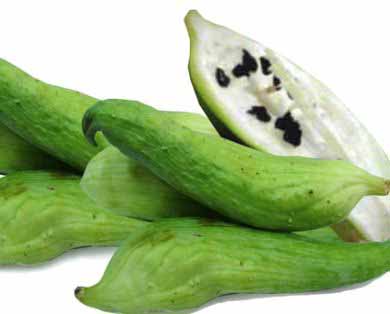
Our friends from the Temple "came" to dinner at our place and instead they brought the best dishes on the table. We learned about a new vegetable native to Peru called 'Cayhua.'  It is a member of the cucumber family but does not taste like one, more like a pepper but not hot.  They were stuffed and delicious. We also had a quinoa dish with cheese from Arequipa, milk and other ingredients. It is the best way to enjoy quinoa we have found.
The Caihua fruits are hollow for easy stuffing. The seeds are removed during preparation.
Caihua like many other foods, plants, and vegetables in Peru is being studied for their medicinal uses. Among the claims for Caihua are blood pressure, cholesterol lowering, and diabetes prevention. Caihua was taken to Florida and planted and has become a pest, not as prevalent as kudzu but bordering on the obnoxious due to its vines that when mature can be climbed on. One other verified claim we can make for Caihua is that it is very pleasant to enjoy with friends on a Sunday afternoon in Lima Peru. 

Thursday, June 16, 2011

More about Ajis de Peru*

Friends confirmed to me there is another hotter pepper here in Peru, not to be found in the large chain groceries, but in the small neighborhood markets. It is called aji pinguita de mono.  It apparently is in the Jabañero range of 100,000 to 300,000 Scoville Units of piquancy.  Now the search is on to find a local store that might have these peppers.  They are not commercially grown but are harvested in the jungle.  One other web site I follow, at least weekly, is called Living in Peru.  They have an article and writeup about a restaurant in Miraflores that uses the aji de mono for select customers.
The Aji Mono peppers turn from green to red as they ripen. Could they be
the source for the Jabañero peppers of Mexico? 
RA made me some salsa once with straight Jabañeros, yellow tomatoes, and onions.  It was so hot I could not eat it but succeeded in getting her to cut it at least by 50% with more tomatoes. We need a few aji de monos for an upcoming 4th of July picnic at the president's house. It is the twice monthly FHE get together for the Norte Americano missionaries. I would like to supply some dragon wings for the event in the range of 50 to 100,000 on the Scoville Index. The dragon wings I am hoping will at last take flight and no one will ask for second helpings. Until then they will only be buffalo wings.

*Just a note also to any who read and follow this blog among our family and friends, like the small and large plates Nephi made, one set contained the history of their rulers and their kings and the everyday events of their lives. The smaller plates contained the writings of the spiritual things that occurred amongst the people. It is not appropriate that we write about the spiritual things that happen often in our lives as temple workers in the Lima Peru Temple.  You will have to come to our homecoming addresses, more than a year away, and even then we can't tell all.  They are special and we keep them close to us and on occasion share them with family. For the present we hope you will enjoy the secular events and experiences we love so much in this marvelous land of Peru. On the internet no one knows where anything goes and there is no way to call it back once it is posted.

Thursday, June 9, 2011

Peruvian Hot Peppers and Dragon Wings

Because of last week's election the temple was open only Saturday morning. In the afternoon we had a very pleasant gathering at the first counselor's apartment for all the senior Norte Americano missionaries and temple missionaries. I volunteered to bring some buffalo wings and RA brought a very fine veggie basket.  I have been in search of hot peppers in Peru for the eight months we have been here, but generally the hottest available are called rocoto. It is from Quechua, one the two predominant indigenous languages of the Andean region of South America, and rendered originally as 'rucutu.' Rocoto have evolved over the millennia and are commercially grown and harvested. Plants can grow to four meters in height, becoming woody and resembling a tree. I would love a rocoto pepper tree in my yard. They handle cold but not freezing temperatures I am certain. Because they do well in cool weather they are popular in Great Britain.
Rocoto plants last for years and resemble bushes to trees
Our favorite rocoto peppers are stuffed Arequipeño style and are made by our friends Brother and Sister Ramos with whom we work in the temple. There are no habeñero peppers in Peru though they apparently  originated here in Pre-ceramic cultures some 8500 years ago in the Peruvian highlands. Habeñero are cousins to the extremely hot Jamaican peppers known as Scotch Bonnet.  When the Spanish came the rocoto were taken to other regions of their empire, to Mexico and the Caribbean.  It is unclear in my preliminary research where the Scotch Bonnet Peppers came from. The Scotch Bonnets are much hotter than anything I have experienced. Rocoto peppers vary greatly in hotness. The hottest here are about equal to the halapeños in spicy hotness or 'piquance.'
Our friends the Ramos brought in dinner and cooked it in our oven.
Rocoto Relleños or stuffed rocotos. The recipes from Arequipa are the very best in Peru.
No Peruvian or Limeño I have talked to takes exception to that generalization. 
In order to make 'hot' sauce for my version of buffalo wings, known as dragon wings, I used nine rocoto peppers, both fried and ground up in the blender to give me something as hot as I could find at two different markets we shop at. Still it was not hot enough, just well in the range of halapeño hot. If people compliment you for your wings and come back for seconds, they are not hot enough. One of the other missionary couples from the temple liked my wings.
Frying up the wings. Note the new 4" smaller waste size  jeans.
Cannot prepare wings too often on our present diets.
During the cooking phase we did have to open the door to the kitchen as the fumes coming off of the pan where the peppers were being seared acted like a sort of police pepper spray with our eyes watering and some coughing and challenge to normal breathing. Likely, it was because of the quantity or mass I was cooking.
The wings and peppers have all come together in the newly
repaired crock pot and will simmer on slow cook for three more hours.
RA's vegetable basket was very well received. She had a very good Ranch flavored dressing to go with it. All of the veggies were washed and rinsed in Clorox water, rinsed again in bottled water. Some of the vegetables were blanched/steamed lightly. Those kinds of precautions are mandatory for vegetables in Peru and not always is it safe for us northern folk to eat lettuce salads at a restaurant, though we still try.
RA's very attractive veggie basket. Peru has wonderful
fresh fruit and vegetables.
A subsequent trip to grocery store, and asking questions in the produce department, netted me some peppers called Aji Limo.  These are more recently cultivated in the Andes and are known for their citrus like flavor in addition to the piquance.  MotherEarth News has a nice writeup about these. They are not however located on the Scoville Chart for spicyness so additional experimentation will have to be carried out. I intend to prepare another batch of my dragon wings and will keep searching for the elusive truly hot Peruvian pepper. Rumor has it that in the jungle there is a small but very hot pepper.
Aji Limo Peppers were enjoyed by the Inca at every meal. Both flavor and its spicy
nature were important to the Inca according to early Spanish chroniclers.  
I have attached a Scoville rating chart for spicyness. The way the chart works is based on the volume of water necessary to reduce the pepper extract to something close to neutral, i.e. no fire when consumed such as Bell Peppers which are "O", having no piquance.

In a future post or addition I report how the Limo Aji Peppers added to the Scoville Index of my dragon wing sauce. The current rating, though very subjective, is probably in the 3,000 to 5,000 range.

UPDATE-- The addition of Aji Limo and Aji Amarillo Peppers to my Rocoto dragon wing sauce has not pushed them into the Jabañero range. Still in the Jalapeño range according to subjective comparisons of the Scoville Index. We are not yet flying supersonic. Stay tuned! 

Wednesday, June 8, 2011

My Friend in Botswana

This month my friend James returns home to Utah after two years living in Botswana and serving in the Peace Corps. We have kept in touch when he has a chance to get near an internet connection. His duties have been to assist the government of Botswana with educational efforts to teach the community in which he lived to understand how the HIV/AIDS epidemic may be arrested. He is well qualified to teach and work with people due to his love for people and easy outgoing nature, plus a master's degree in social work. Botswana has one of the most severe HIV/AIDS epidemics in the world. Among adults from ages 15 to 49 nearly 1/4th of the population have tested positive for HIV/AIDS. The UN estimates 20 percent of all children in Botswana are orphaned and presently living without parents. The capacity to care for kids is being exhausted, especially as the current generation of grandparents begins to thin. Further, according to Wiki, the epidemic threatens economic growth and political stability the entire region.
On a river trip, a few days of rest
James has done all he could for the people of his community and lived under difficult circumstances on his own with little support for his endeavors. He has had to stay in at night due to roving lions, dealt with many bugs and insects that sting and bite, plus poisonous reptiles, absolutely incompetent drivers, several car accidents, bus and vehicle breakdowns. In addition to the aforementioned vehicle breakdowns he has been forced to hike miles and miles across country looking to hitch a ride. I have told him several times he needs to write up his experiences into a book. He has posted many of his photos from his life in the Peace Corps. He does takes beautiful photos.
Elephant on the run
I have known many young men over the decades as a scout leader and my associations in the Church, but never anyone like him. To borrow and paraphrase from the Buddha -- James 'in the midst of abundance counted nothing as his own and with pure and unselfish desires' gave two years of his life to helping those who are at peril in Botswana.
His Farewell party 
Here's to you James, thanks for what you have done and given!

Thursday, June 2, 2011

Mini Sandias y Algodon Peruano (Peruvian Cotton)

We have been walking to, and visiting, several newly discovered stores not far from our apartment. One is called Vivanda and is known for having things other stores do not stock. It is more upscale than our local Tottus. We have found incredible mandarins, very large imported US navel oranges, Snickers bars, Godiva chocolate, M&M's, and even Fruit Loops.  In addition they have a wonderful bakery section though our dieting at present has kept us from sampling any of those treats.
Clockwise the store at night, the chocolate candy counter next to check out,
The bakery section and one of the wonderful cakes we'll try at the next party.
Corn Flakes and other American cereals. RA is filling a bag with mandarins.
They have a large section and variety of cheeses including yellow cheddar
and gouda which is sometimes more difficult to find.
Fresh vegetables fill the shelves and we have brought home something new to try. Being in Peru is about trying many new things. These small vegetables are called 'Mini Sandia' and are not native to Peru. They may have originated in Central America and Mexico and can be grown in the US and seeds are sold in many garden centers. They will end up on a vegetable tray RA is preparing for a Saturday afternoon get together with the upstairs neighbors and the other Norte Americano Missionaries from the Temple and Area Office.  However, they may end up with our scrambled eggs along with onions, tomatoes and shrooms that Adam does not like. The Mini Sandias can be put into salads, salsas, pickled like gherkins, and are reportedly "terrific in stir fries."  They are also known an 'mouse melons' among other names. These little fruits can be found at farmer's markets and are grown as heirloom vegetables.  It is about a 2 mile walk to Vivanda and we plan on walking there at least once a week. We leave in the morning, complete our shopping, and then ride back in a taxi with our groceries.
The Mini Sandia or Mouse Melons washed in Chlorox water
and rinsed for eating
The other stores we have found are in a neighboring community of Ate. Among them is clothing store called Creditex.  It is an outlet for an upscale Peruvian shirt and clothing manufacturer.  Unlike most every other store we have visited in Lima they have sizes to accommodate North Americans. Several New York clothing brands are represented along with Cutter and Buck and Cabelas. Prices have been very attractive. I have bought several of the aforementioned shirts from $3.00 to $13.00 each. They favorably compare to online prices in America from $65.00 to $105.00. Since we have been in Peru I have been looking for a source of Peruvian Pima Cotton shirts, deemed to be among the very best in the world.
The outlet store for Cutter and Buck clothing, Cabelas and other shirt makers.
The insert was a twill 100% Pima Cotton soft as silk shirt I bought for $13.00
This Peruvian Cotton just known as Pima Cotton in many other parts of the world compares to very fine Egyptian Cotton. After the arrival of the Europeans, cotton seeds from Peru were taken to the Caribbean where it would dominate local agricultural production and worked together with tobacco to encourage the British to increase the slave trade bringing workers from Africa. From the Caribbean cotton moved to the Carolinas and gave rise to Sea Island Cotton bringing slavery and the attendant human suffering to North America.
Apparently Peruvian Pima Cotton is still picked by hand which preserves
fibers and assures its softness.
In the early 1900's cotton seeds from Peru were planted in AZ and raised by Pima Indians working with the USDA, hence its name.  In the North of Peru and coastal regions of Ecuador cotton balls have been traced back by archaeologists to 4400 BCE. The fibers of this cotton are up to 40% longer and softer giving it a more silk like feel.  Cotton was used by the maritime cultures in Peru 6,000 to 7,000 years ago in making fish nets in addition to clothing and the recording and accounting system of mysterious writing system known as Quipu where different colors of cotton strings were tied together and branched apparently storing enormous amounts of information. There is to date no record of any other written language in pre-Columbian Peru.
Mostly cotton threads, not wool, were used in the making of this quipu.
Scholars and archaeologists have not deciphered this mysterious recording medium
Peru continues to be an impressive country for us with so much in natural resource, history, and potential.  It remains one of the very fastest growing economies in the world, only second to China last year. We await the results of the election this Sunday to see which way it will go in the future. It is an important election with two very clear alternatives for voters. A number of Peruvians believe one candidate, a former military commander and supporter of Venezuela's Hugh Chavez, will enact constitutional decrees to allow more than one term, essentially becoming a dictator. The other is the daughter of imprisoned Alberto Fujimori. The business community is largely behind Keiko Fujimori. There are concerns for the maintenance of the free market economy and continuation of international agreements and businesses in Peru.

We are not going anywhere this weekend as the Temple is closed in the afternoon on Saturday and no church meetings on Sunday's election day. We will continue our walks this weekend and discovery of things to do in our world in Lima Peru.